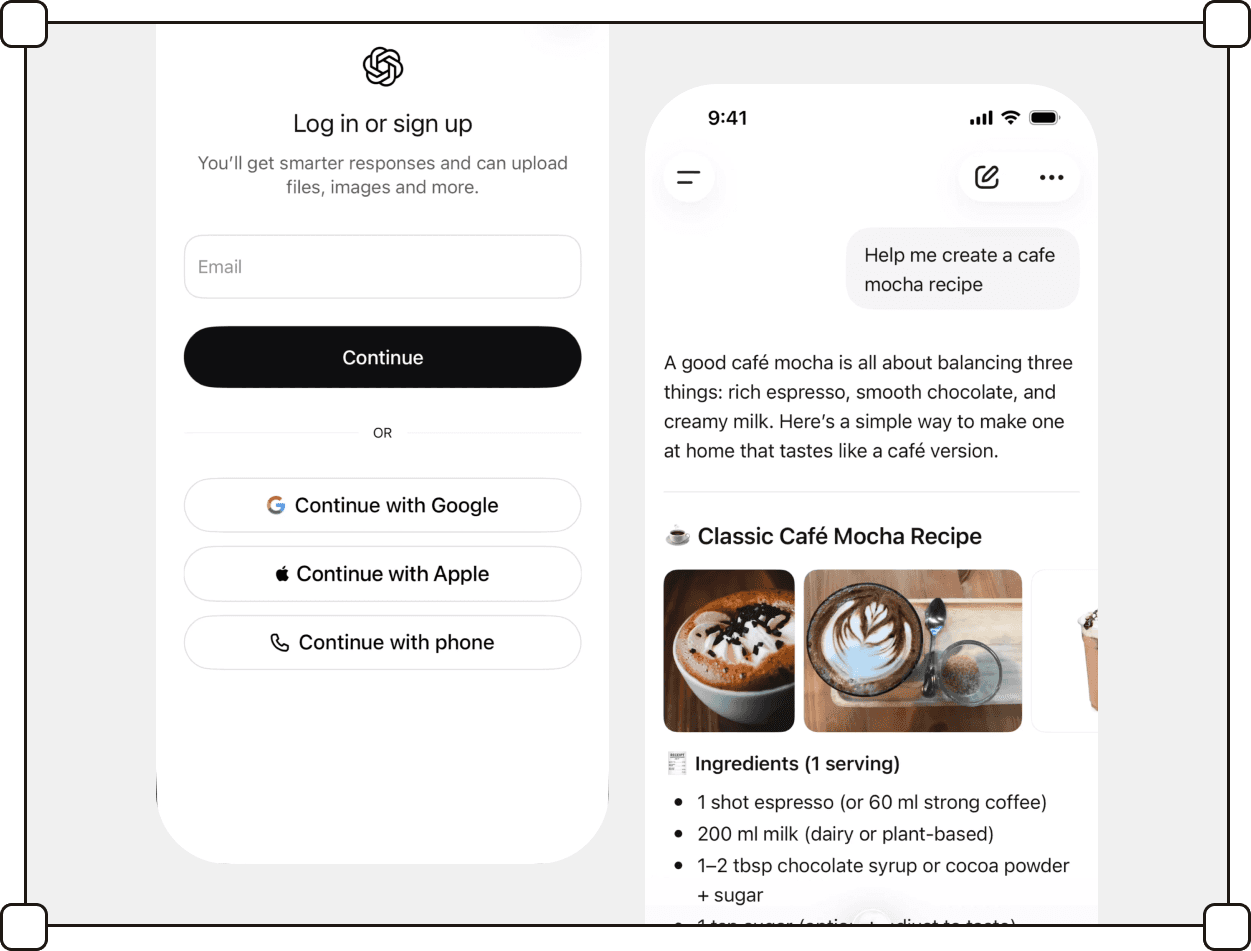
Metaphores from architectural drawing and engineering schematics. Grid not as an invisible foundation but as the primary visual element
Intro
Blueprint is a style that draws from the aesthetics of technical drawing, engineering documentation, and cyanotype (a historical technique for copying architectural plans that gave the entire genre its name).
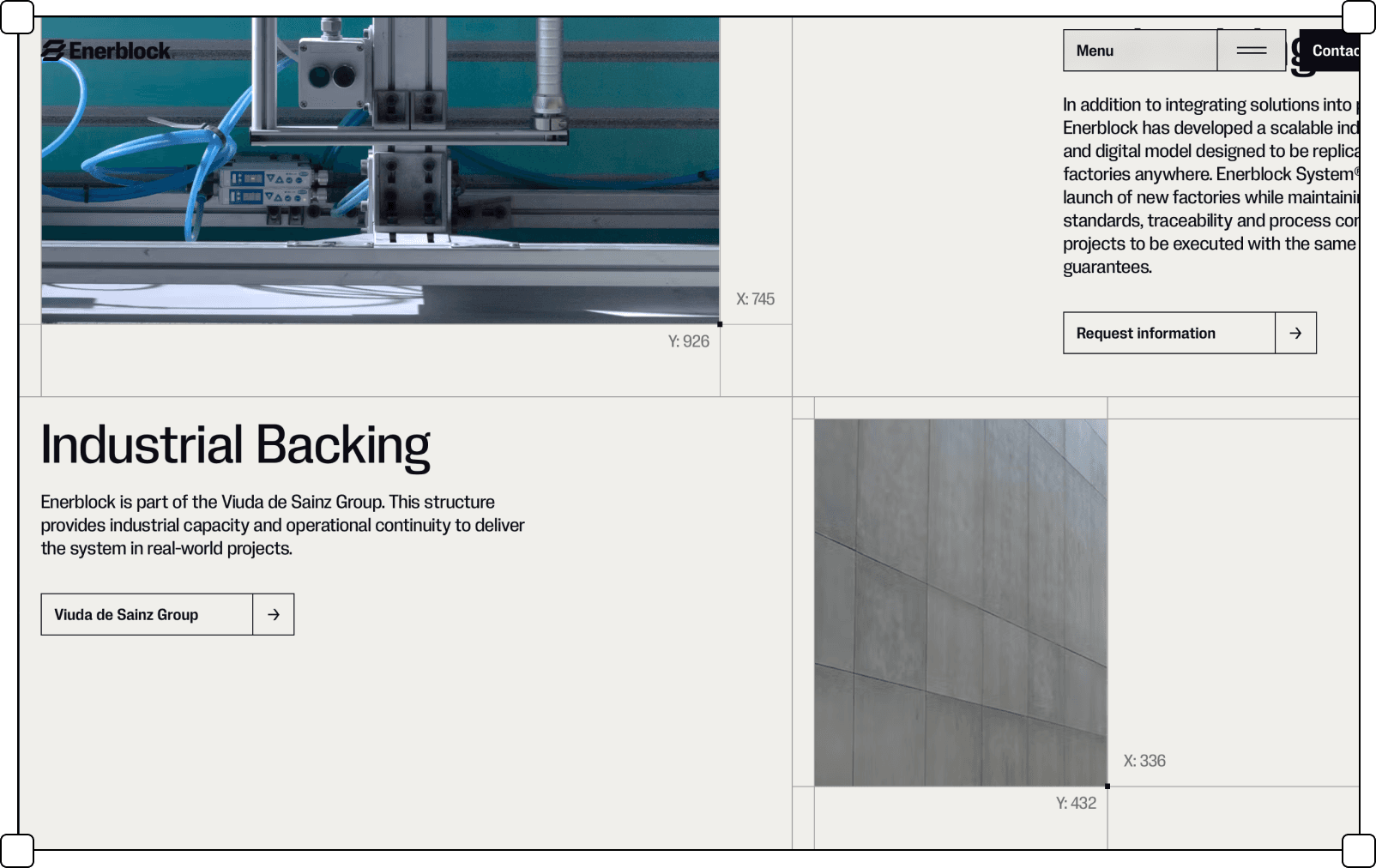
In interface and web design, it manifests through visible grids and guide lines, descriptive labels reminiscent of technical drawing dimensions, and a monospaced font that complements the technical character of the whole.
The page or interface feels like something in the process of being described or documented, as if looking at a project rather than a finished product.
The grid ceases to be a hidden framework and moves beyond the design phase, becoming a component of the composition.
The style's roots trace back to NASA technical documentation and electronic schematics – materials designed more for content communication than aesthetics, which paradoxically developed a strongly recognizable visual language.
Summary
listed
Sep 2026
Also known as
Schematic UI, Technical Style, Engineering Aesthetic, Grid UI
Sources
landbook.com
Typography
Type is sans-serif and technical in character — grotesques with even stroke weight and little personality of their own. Monospaced faces run through the interface as a second voice: labels, measurements, codes, and captions set in fixed-width type, the way annotations appear on an engineering drawing.

Illustrations
Illustration takes the form of technical drawing: line schematics of abstract devices and mechanisms, suggesting that some physical machinery sits behind the software. These are joined by smaller technical inserts — diagrams, charts, exploded views, micro-graphics — that read as documentation more than decoration. Line weight stays thin and uniform, and the drawings are rarely shaded or coloured.

Corner rounding
Corners are sharp. The technical register calls for it — a rounded button would sit awkwardly inside a grid of straight lines, and buttons in this style are often outlined by that grid directly. Where rounding appears at all it is minimal, a pixel or two, and usually confined to small controls.

Frame shapes
Containers are rectangular with hard edges, and their boundaries frequently coincide with the visible grid — a block occupies a set of cells rather than floating freely over the page. The grid decides where things start and end.

Borders
Borders are drawn to be seen: thin lines in solid or dashed stroke, sometimes both on the same element to distinguish different kinds of edges. A characteristic detail is the line that fades out at its end — a stroke tapering to nothing like a pencil lifted from paper — used where a border runs off toward the edge of the viewport or a crosshair extends beyond its box.

Separators
Content is separated by the grid itself. Instead of spacing or subtle rules, sections are divided by the same visible lines that structure the whole page — horizontal and vertical, evenly spaced, often extending across the full width of the viewport. Intersections are sometimes marked with small crosses or dots, the way registration marks appear on a printed sheet.

Containers
Blocks carry small labels attached to their edges — a section number, a component name, a dimension marker, a coordinate — the way parts on an engineering drawing are tagged and called out. The label usually sits in monospaced type at a corner of the block, sometimes with a leader line pointing to what it describes. Every container reads as a documented part, identified alongside its contents.
Transparency
Surfaces are opaque and flat. Layers have solid fills and nothing shows through them — no glass, no frosted overlay, no semi-transparent panel. This keeps the interface in the register of a drawing on paper, where a line is either there or it isn't.

Shadows
The interface is flat by design: a drawing has no light source, and elevation, where it needs to be signalled, is handled with line and outline instead of shading. A dropdown or modal in this style tends to be bordered, not lifted.