


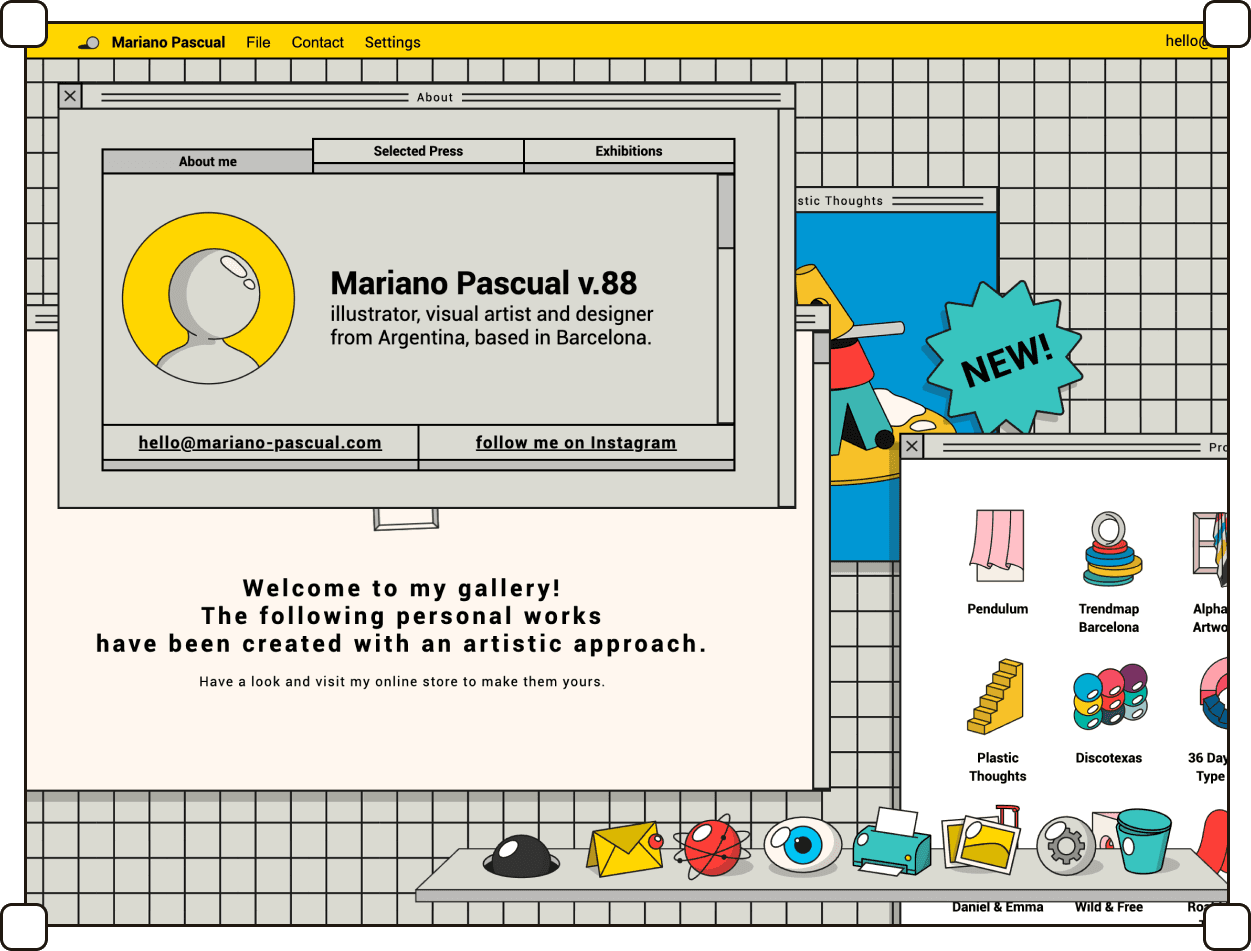


Status bars, title bars, draggable windows and retro scrollbars: the visual language of operating systems, brought into the browser.
Intro
Over several decades, operating systems like Windows, MacOS, and Linux have evolved as built-in infrastructures within our devices, providing access to successive layers of interfaces, whether through a browser or by downloading applications.
This style draws from the aesthetics of operating systems and the office-inspired desktop metaphor originating from the early days of computers.
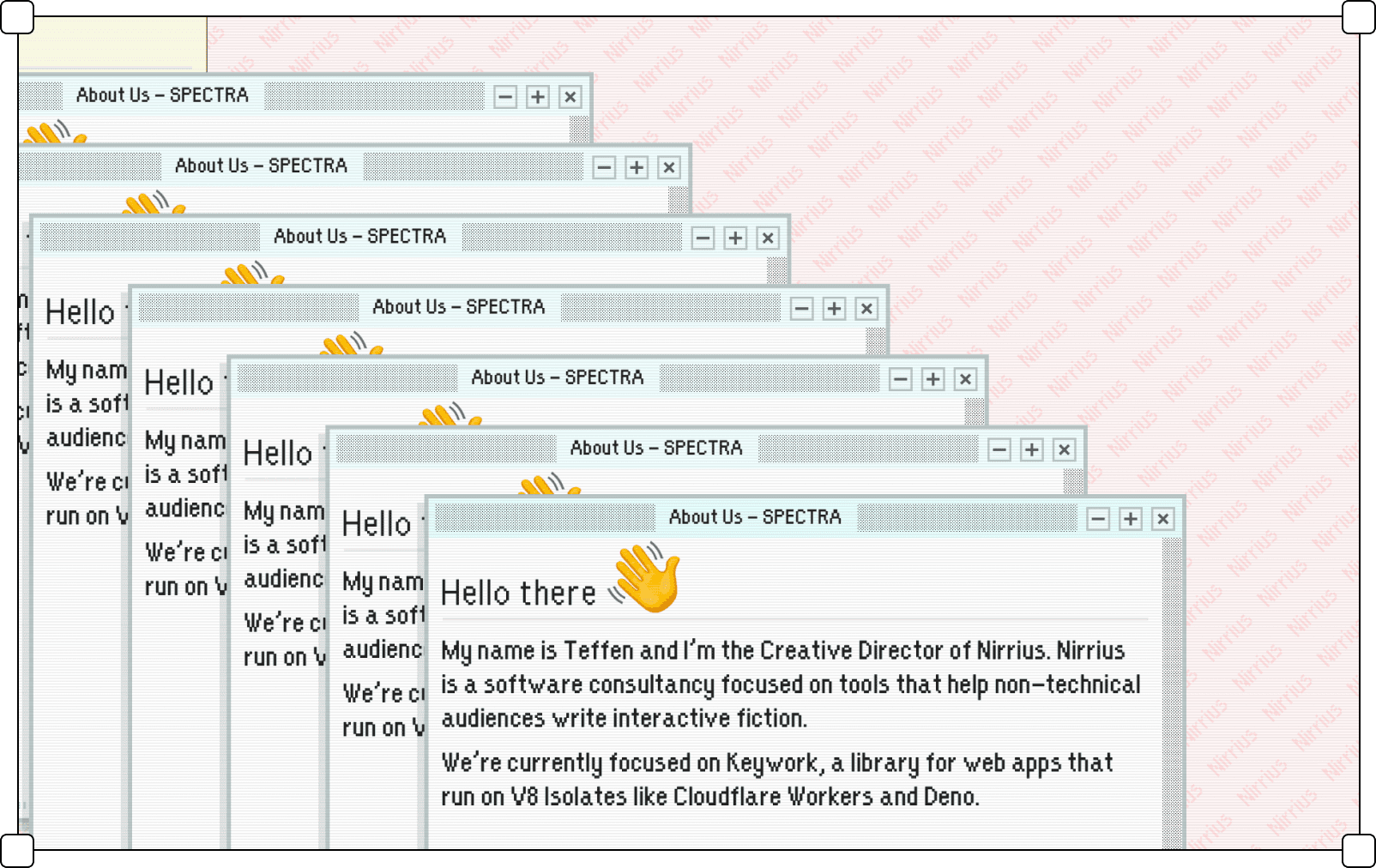
This style uses familiar elements such as status bars, referencing the desktop metaphor, icons with labels, and window stacks (originating from piles of documents spread out on a desk).
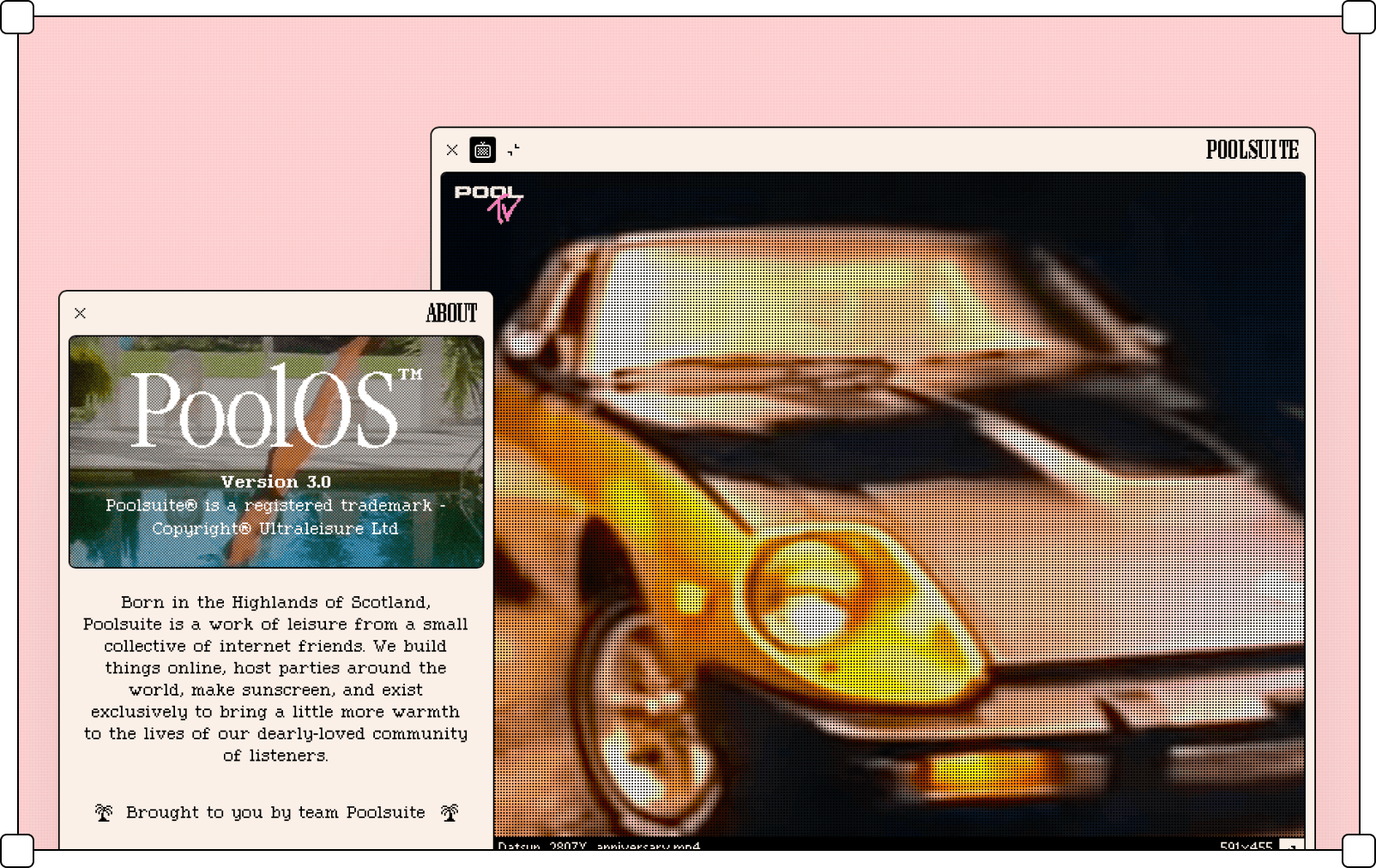
Subpages are often displayed as overlay layers, similar to how applications open in an operating system on a computer.
In many cases, visual elements take on retro shapes, for example, scroll bars, which nowadays are less prominently marked in interfaces due to users’ familiarity with basic interactions.
Summary
listed
Sep 2026
Also known as
Desktop Core, Windowed UI, System UI
Sources
https://aesthetics.fandom.com/wiki/Webcore
Featured designers
asiagawron.com, wesdieleman.com, wedzicka.com
Typography

Illustrations

Corner rounding

Layers order

Frame shapes

Gradients

Borders
Containers

Transparency

Shadows
Iconography


